

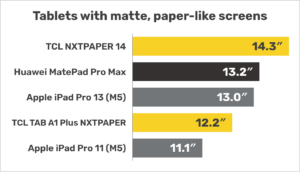

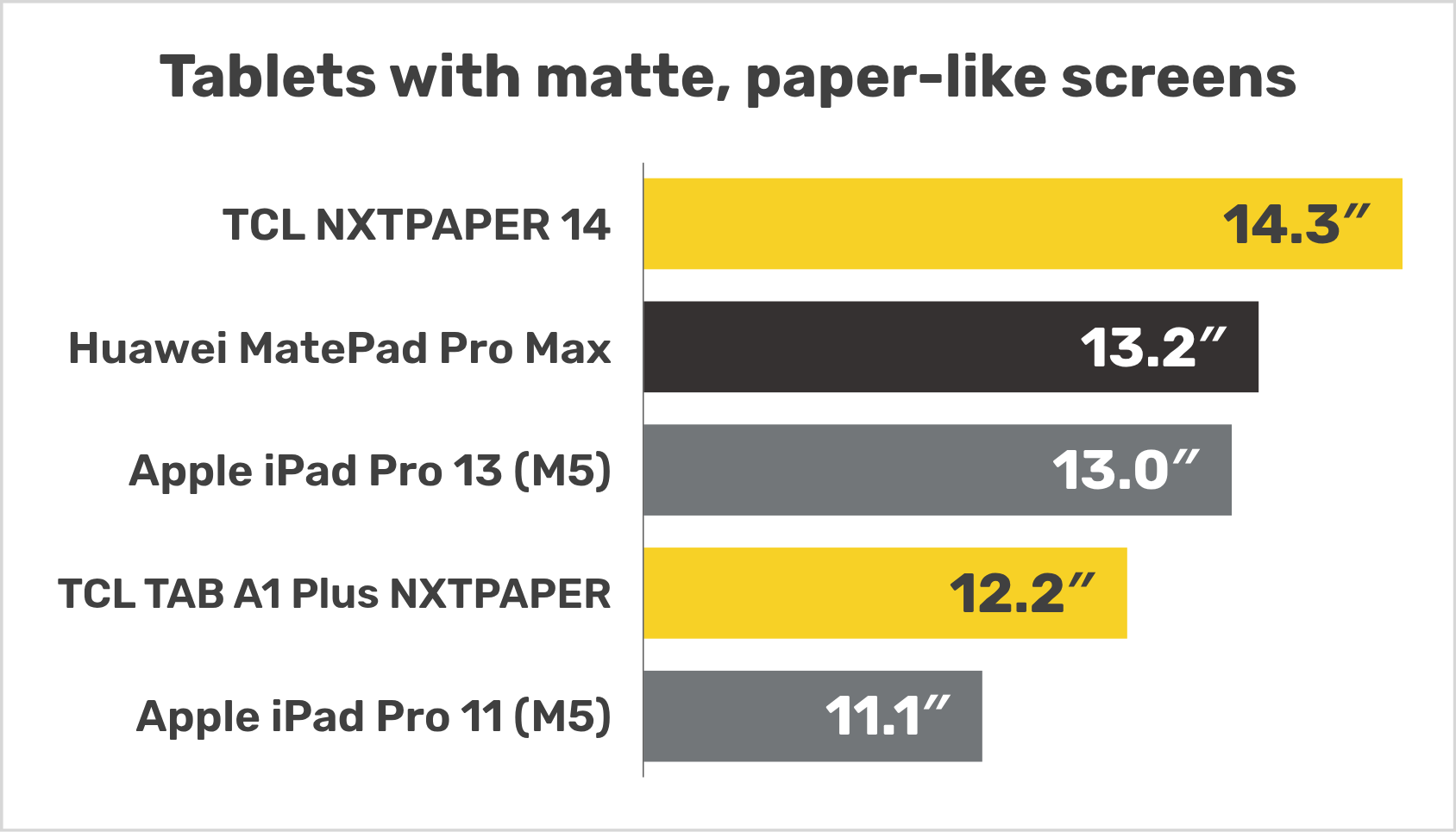
There are many alternatives to Apple’s expensive nano-textured display glass. Diagram: www.large-screens.com
The best tablets with paper-like (nano-texture) screens
Last updated on October 3, 2026
Nano-texture glass is not exclusive to iPad displays: many tablets have a matte, paper-like screen, and most of them are much cheaper than Apple’s iPad Pro.
Each brand has its own name for it: nano-texture (Apple), PaperMatte (Huawei), NXTPAPER (TCL), Paperlike (Honor), Matte Display Edition (OPPO), “soft light” (Xiaomi, vivo and Honor in China). All of them do the same thing: a finely etched or coated surface scatters the light of lamps and windows, so the screen shows no mirror image. In this article, we are only interested in these matte screens, not in glossy screens with an anti-reflective coating, such as Samsung’s Galaxy Tab S10 and S11 (more on this below).
Here is the list of all tablets with matte screens available in October 2026, starting with those with the largest displays.
I am registered with the Amazon Associates Program. This website contains Amazon affiliate links (marked with a star). If you click on one of these links and make a purchase, I may receive a commission from Amazon.
Clicking on an affiliate link does not change the price you pay. As an Amazon Associate I earn from qualifying purchases.
 I am a classical musician (violist) with 20 years of professional experience in orchestra and chamber music. For many years, I have been advising colleagues, students, and fellow musicians in the choice of their tablet.
Along with the many positives of using tablets, I’ve also seen the negatives: tablets crashing just before going on stage, batteries that don’t hold up during long rehearsal days, and missing page turner pedals in concert.
Key takeaways
- Largest: the TCL NXTPAPER 14 (14.3 inches) is still the largest tablet with a matte screen, and the only 14-inch one sold in Europe and the USA.
- Best image: the iPad Pro 13″ (M5) with nano-texture glass, but only with 1 TB or 2 TB of storage, which makes the matte option very expensive.
- Cheapest: TCL’s NXTPAPER tablets (11 and 12.2 inches).
- Matte ≠ anti-reflective: Samsung’s Galaxy Tab S10 and S11 have a glossy screen with an anti-reflective coating.
- Downsides: slightly lower contrast and sharpness, a fine grain on white areas, and more careful cleaning.
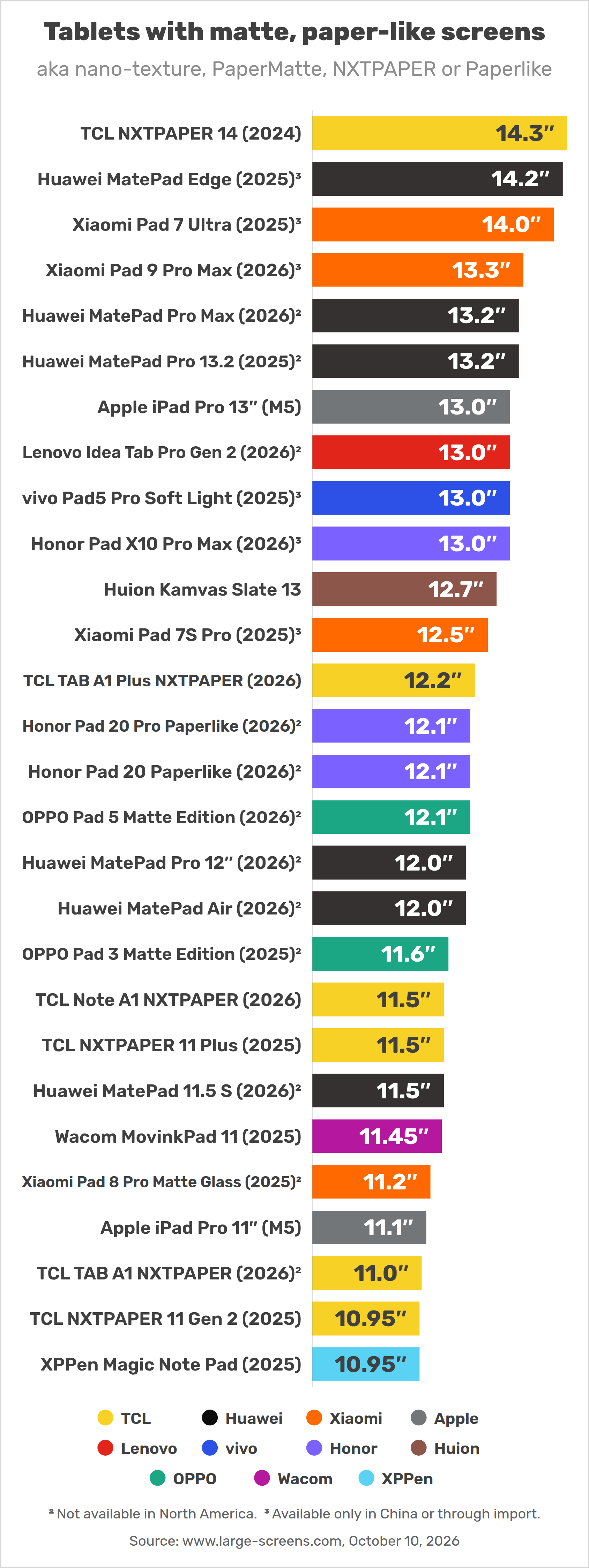
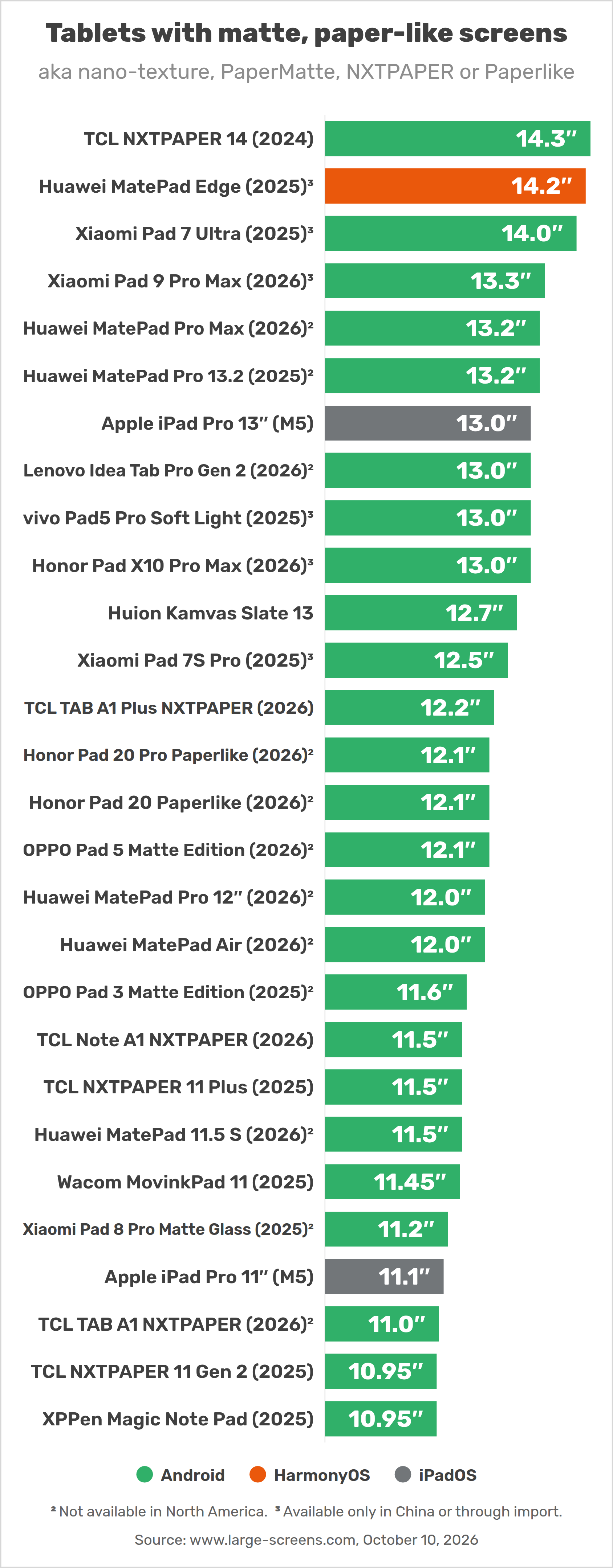
Table of contents
- 1. All tablets with matte screens in 2026
- 2. The largest tablets with a matte screen (13 and 14 inches)
- 3. 12-inch tablets with a matte screen
- 4. 11-inch and smaller tablets with a matte screen
- 5. Matte, nano-texture, anti-reflective: what’s the difference?
- 6. The downsides of matte screens
- 7. Who should buy a tablet with a matte screen?
- 8. Is nano-texture glass safe? The “glass dust” question
- 9. Nano-texture or matte screen protector?
- 10. More and more tablets with matte screens
- 11. FAQ: tablets with matte screens
1. All tablets with matte screens in 2026
The table lists every tablet with a matte screen that we found, sorted by screen size. “Option” means that the tablet is also sold with a glossy screen. Prices are the makers’ launch or recommended prices (October 2026), not Amazon prices. Models sold only in China are marked “China / import”: they usually have no Google services and Chinese software.
| Tablet | Screen size | Screen | Matte surface | Standard or option | Released | Available in | Maker price |
|---|---|---|---|---|---|---|---|
| TCL NXTPAPER 14 | 14.3″ | LCD, 2400 × 1600, 60 Hz, 400 nits | NXTPAPER 3.0 | standard | 2024 | USA · Europe | €399 (launch) |
| Huawei MatePad Edge HarmonyOS |
14.2″ | OLED, 3120 × 2080, 120 Hz | Soft Light / PaperMatte | option | 2025 | China / import | from CNY 5,999 |
| Xiaomi Pad 7 Ultra | 14″ | OLED, 3.2K, 120 Hz, 1600 nits | Nano soft-light | option (+CNY 600) | 2025 | China / import | from CNY 5,699 |
| Xiaomi Pad 9 Pro Max | 13.3″ | LCD, 3408 × 2272, 144 Hz, 1000 nits | Nano soft-light | option (+CNY 300) | 2026 | China / import | from CNY 4,799 |
| Huawei MatePad Pro Max | 13.2″ | OLED, 3000 × 2000, 144 Hz | PaperMatte | option (PaperMatte Edition) | 2026 | Europe · China / import | from €1,099 (Germany) |
| Huawei MatePad Pro 13.2 | 13.2″ | OLED, 2880 × 1920, 144 Hz | PaperMatte | standard in Europe, option in China | 2025 | Europe · China / import | €1,199 (with keyboard) |
| Apple iPad Pro 13″ (M5) iPadOS |
13″ | Tandem OLED, 2752 × 2064, 1000 nits (1600 HDR) | Nano-texture glass | option, 1 TB and 2 TB only | 2025 | USA · Europe | nano-texture from $2,199 |
| Lenovo Idea Tab Pro Gen 2 | 13″ | LCD, 3504 × 2190, 144 Hz | Matte anti-glare edition | option | 2026 | Europe · China / import | from €549 |
| vivo Pad5 Pro Soft Light Edition | 13″ | LCD, 3096 × 2064, 144 Hz, 1200 nits | Soft light | separate edition | 2025 | China / import | — |
| Honor Pad X10 Pro Max Soft Light | 13″ | LCD, 2500 × 1560, 120 Hz, 700 nits | Soft light | option (China only) | 2026 | China / import | — |
| Huion Kamvas Slate 13 | 12.7″ | LCD, 2176 × 1600, 90 Hz, 350 nits | Nano-etched glass | standard | — | USA · Europe | — |
| Xiaomi Pad 7S Pro | 12.5″ | LCD, 3.2K, 144 Hz | Nano soft-light | option (+CNY 200) | 2025 | China / import | CNY 3,299 |
| TCL TAB A1 Plus NXTPAPER | 12.2″ | LCD, 2400 × 1600, 120 Hz | NXTPAPER | standard (matte twin of the TAB A1 Plus) | 2026 | USA · Europe | $399.99 |
| Honor Pad 20 Pro Paperlike | 12.1″ | LCD, 3000 × 1872, 165 Hz, 700 nits | Honor Paperlike Display | separate edition | 2026 | Europe · China / import | — |
| Honor Pad 20 Paperlike | 12.1″ | LCD, 3000 × 1872, 120 Hz, 700 nits | Honor Paperlike Display | separate edition | 2026 | Europe · China / import | — |
| OPPO Pad 5 Matte Display Edition | 12.1″ | LCD, 2800 × 1980, 120 Hz, 900 nits | Anti-glare matte | separate edition | 2026 | Europe · China / import | — |
| Huawei MatePad Pro 12″ | 12″ | OLED, 3036 × 1952, 144 Hz, 1600 nits | PaperMatte | standard in Europe | 2026 | Europe | from €799 |
| Huawei MatePad Air | 12″ | OLED, 2800 × 1840, 144 Hz | PaperMatte | option (+€50 in Europe) | 2026 | Europe · China / import | €849–999 |
| OPPO Pad 3 Matte Display Edition | 11.6″ | LCD, 2800 × 2000, 144 Hz | Anti-glare matte | separate edition | 2025 | Europe · China / import | — |
| TCL Note A1 NXTPAPER | 11.5″ | LCD, 2200 × 1440, 120 Hz, 300 nits | NXTPAPER Pure | standard | 2026 | USA · Europe | $549 |
| TCL NXTPAPER 11 Plus | 11.5″ | LCD, 2.2K, 120 Hz, 550 nits | NXTPAPER 4.0 | standard | 2025 | USA · Europe | $249 / €249 |
| Huawei MatePad 11.5 S | 11.5″ | LCD, 2.8K, 144 Hz | PaperMatte | standard | 2026 | Europe | €399 |
| Wacom MovinkPad 11 | 11.45″ | LCD, 2200 × 1440, 400 nits | Anti-glare (AG) glass | standard | 2025 | USA · Europe | — |
| Xiaomi Pad 8 Pro Matte Glass | 11.2″ | LCD, 3.2K, 144 Hz, 800 nits | Nano soft-light | option (+€20 to +€100) | 2025 | Europe · China / import | £629 (UK) |
| Apple iPad Pro 11″ (M5) iPadOS |
11.1″ | Tandem OLED, 2420 × 1668, 1000 nits (1600 HDR) | Nano-texture glass | option, 1 TB and 2 TB only | 2025 | USA · Europe | nano-texture from $1,899 |
| TCL TAB A1 NXTPAPER | 11″ | LCD, 2.1K, 90 Hz | NXTPAPER | standard (matte twin of the TAB A1) | 2026 | Europe | — |
| TCL NXTPAPER 11 Gen 2 | 10.95″ | LCD, 1920 × 1200, 500 nits | NXTPAPER 4.0 | standard | 2025 | USA · Europe | about $220–290 |
| XPPen Magic Note Pad | 10.95″ | LCD, 1920 × 1200, 90 Hz, 400 nits | AG nano-etched glass | standard | 2025 | USA · Europe | — |
2. The largest tablets with a matte screen (13 and 14 inches)
In October 2026, ten tablets with a screen of 13 inches or more are available with a matte screen. Only five of them are sold outside China, and only two in the United States and Canada: the TCL NXTPAPER 14 and the 13-inch iPad Pro.
2.1 TCL NXTPAPER 14
Unfortunately, the largest tablet with a paper-like display isn’t available worldwide. Europe, Middle East, Asia Pacific, Latin America and Africa are the announced regions where the TCL NxtPaper is sold, North America is missing from the list.
I don’t understand why this model is not available in North America, as other (in my opinon less interesting) TCL tablets are being sold in the US and Canada.
Let’s hope that the successor of the NxtPaper 14 (which may be called the NxtPaper 14 Plus) will be released worldwide!
Update October 2026: the NXTPAPER 14 is now also listed on Amazon.com in the US (see the link below). TCL has not released a 14-inch successor: its newest NXTPAPER tablets are smaller, such as the 12.2-inch TAB A1 Plus NXTPAPER (TCL).
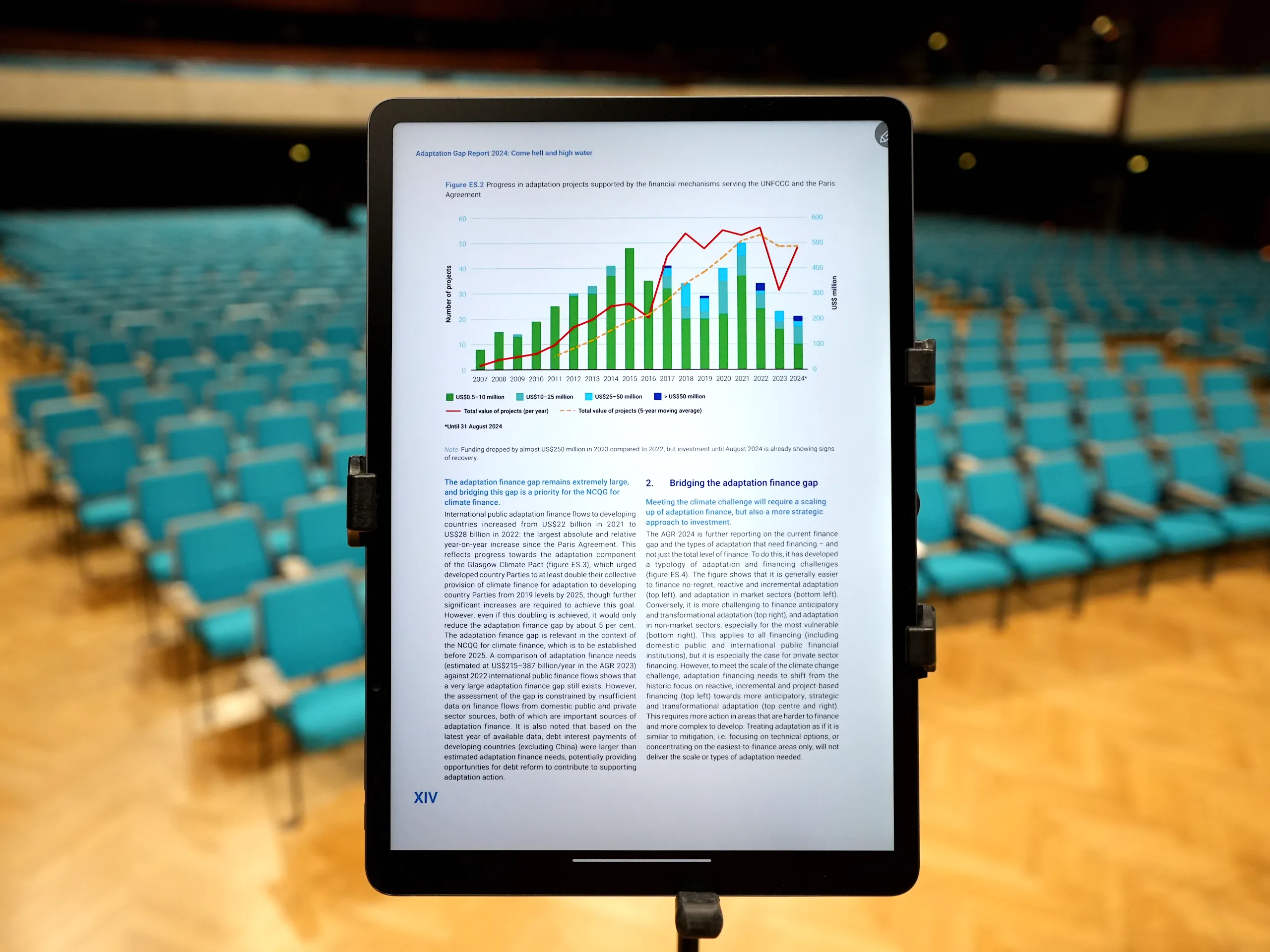
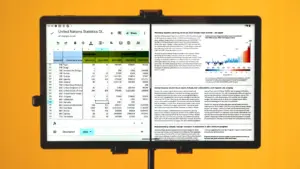
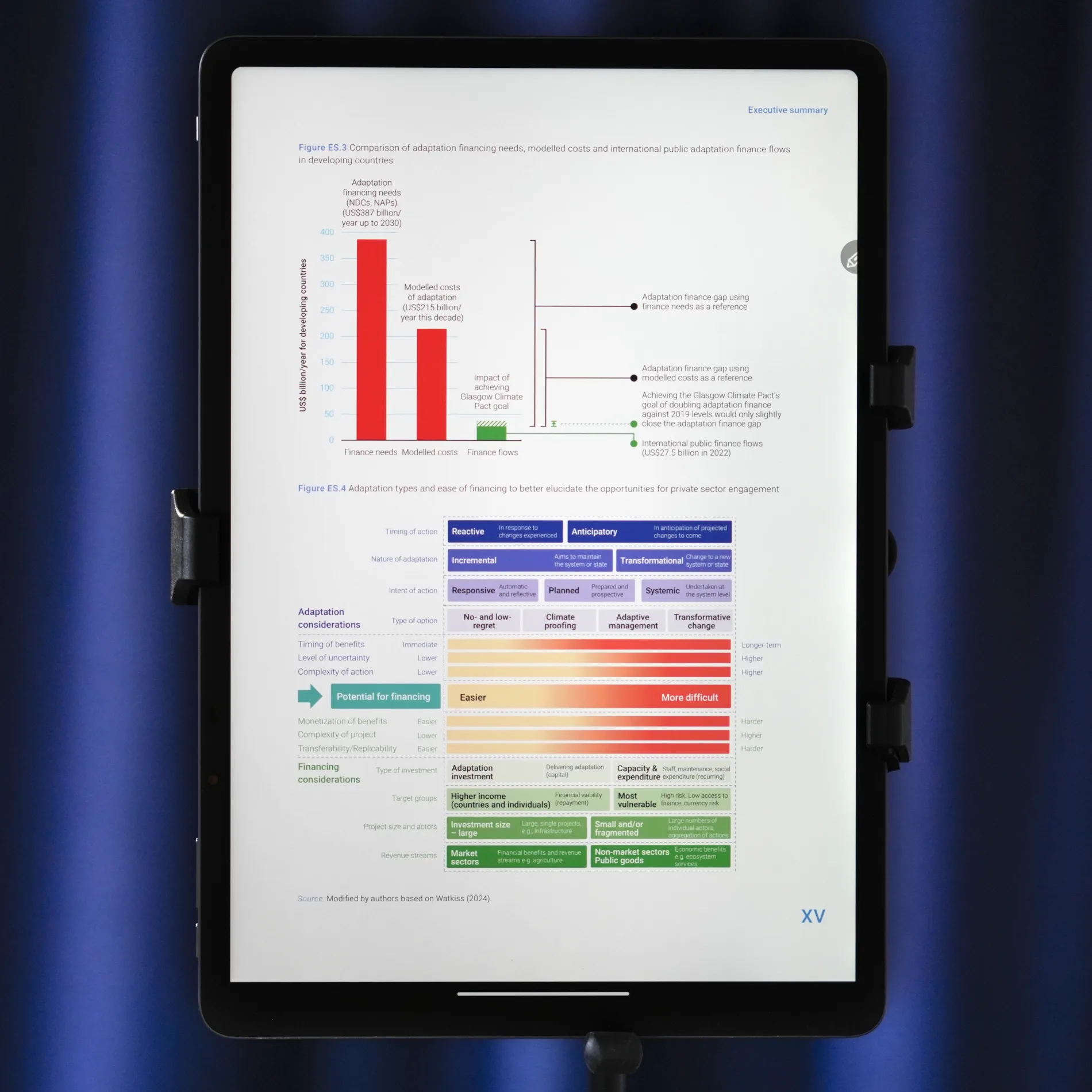
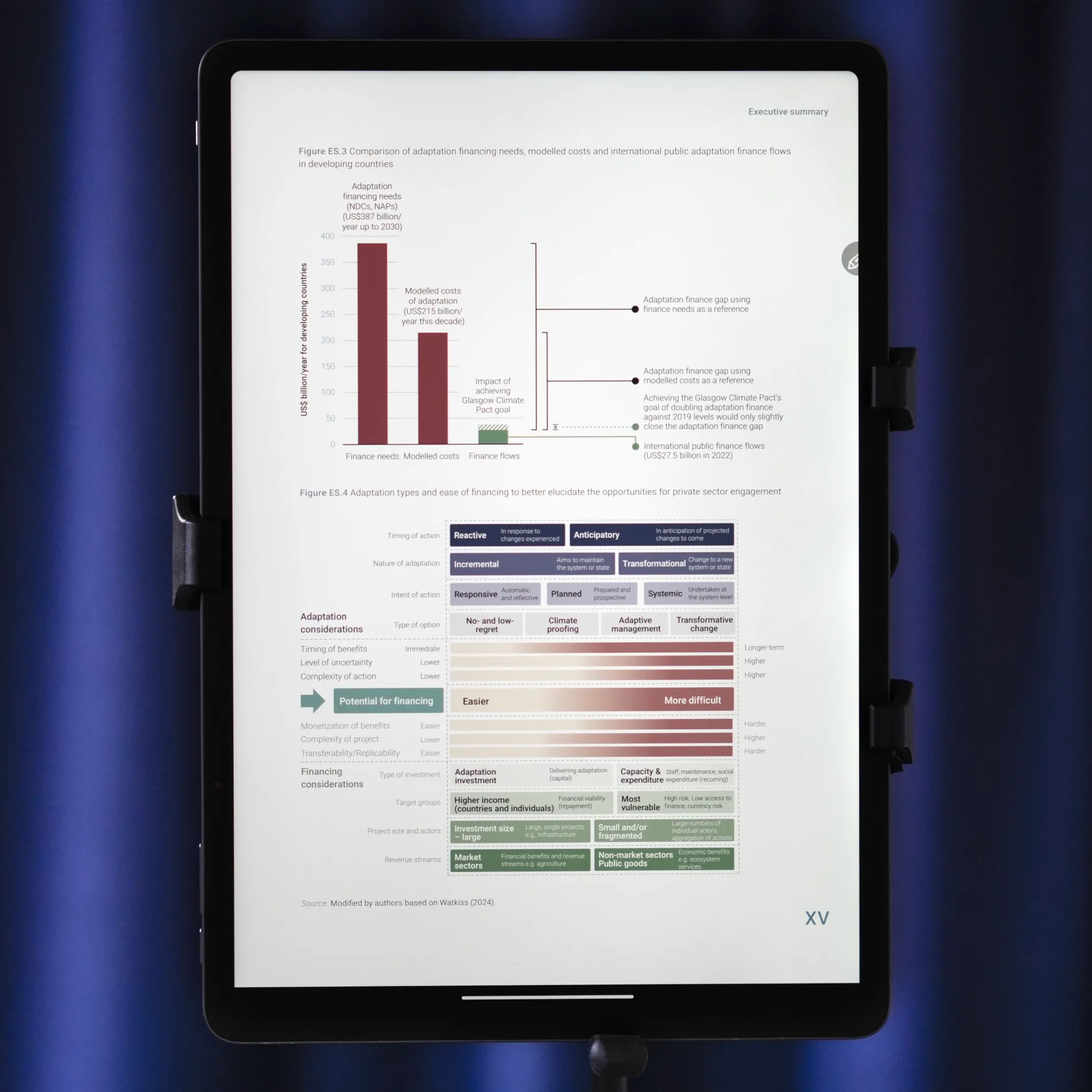
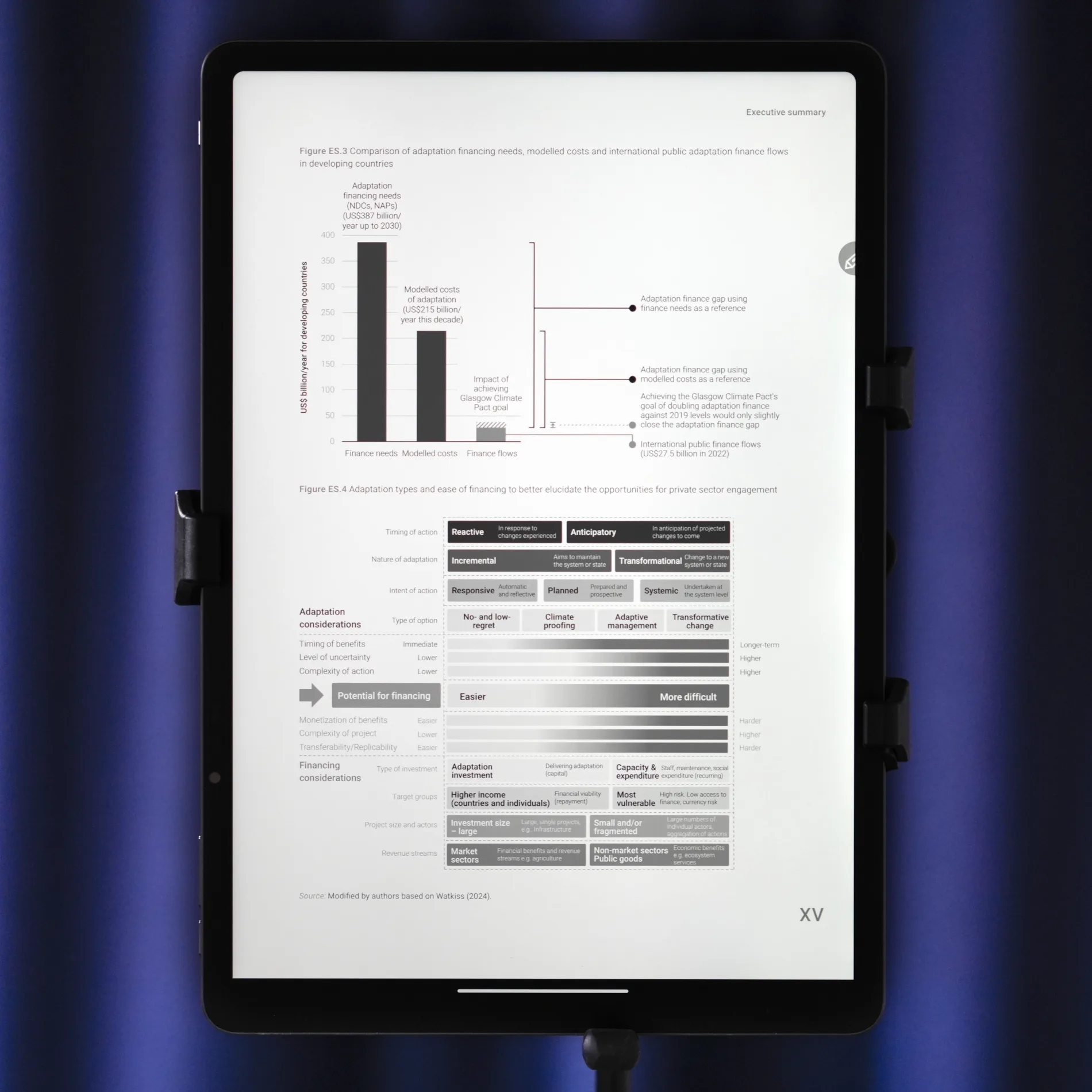
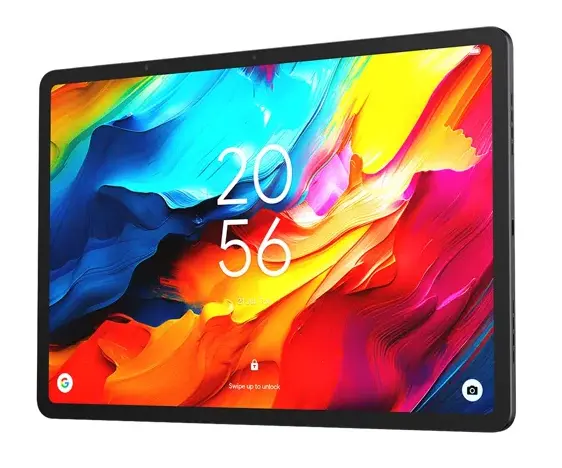
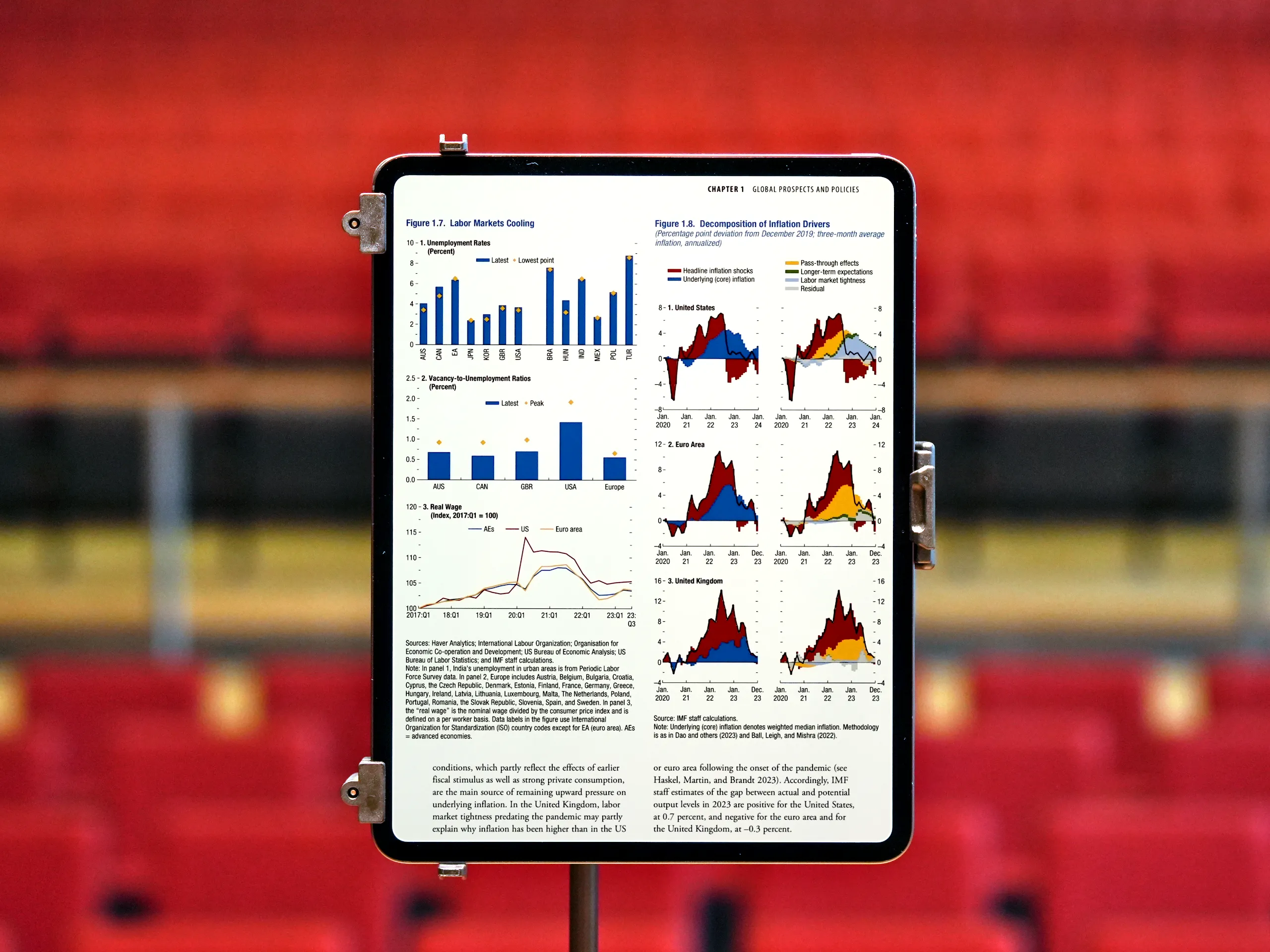
The TCL NXTPaper 14 is the largest tablet worldwide with a nano-textured display. Image credit: large-screens.com
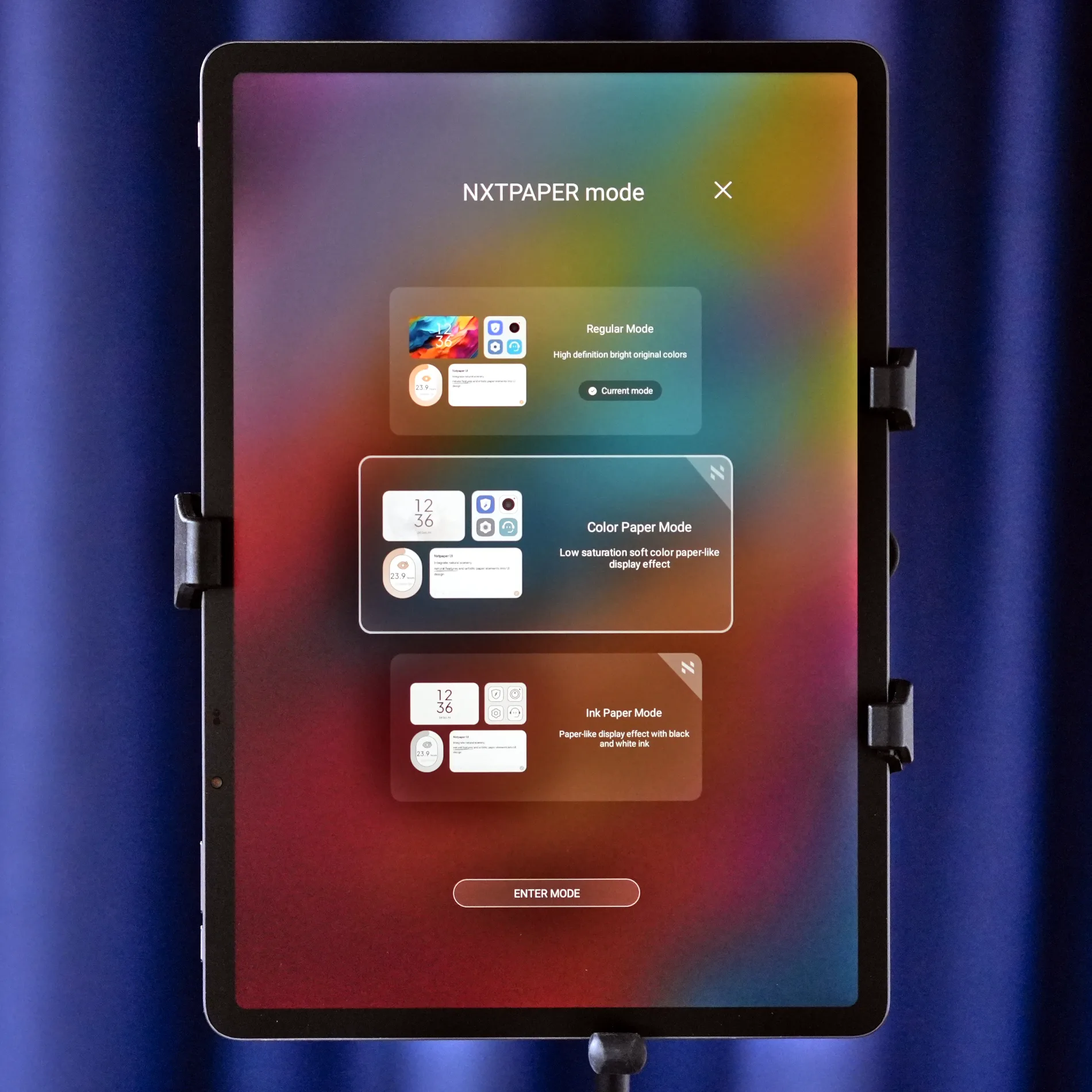
TCL NXTPaper 14 offers three display modes: Regular, Color Paper (mimics color E-Ink displays) and Ink Paper (black and white paper-like mode). Image credit: large-screens.com
Pros
- Largest tablet with a nano-textured display on the market
- Great price
Cons
- Only 400 nits maximum brightness
- Only two years of security updates
2.2 Huawei MatePad Pro 13.2 and MatePad Pro Max
Huawei calls its matte glass PaperMatte. According to Huawei, it is made by “high-precision nano-level etching”; the third generation (2025) adds a light-diffusing film under the cover glass to reduce the grainy look of earlier versions (Huawei Central).
The MatePad Pro 13.2 (2025) has a 13.2-inch 2880 × 1920 OLED screen at 144 Hz; in Europe, it is only sold with PaperMatte glass. In 2026, Huawei released its successor, the MatePad Pro Max: same size, 3000 × 2000 pixels, only 4.7 mm thin and 509 g with PaperMatte glass, which is optional here (in Germany, the PaperMatte version costs more and comes with the keyboard). Outside China, both run HarmonyOS 4, which runs Android apps but has no Google services (Huawei, Notebookcheck).
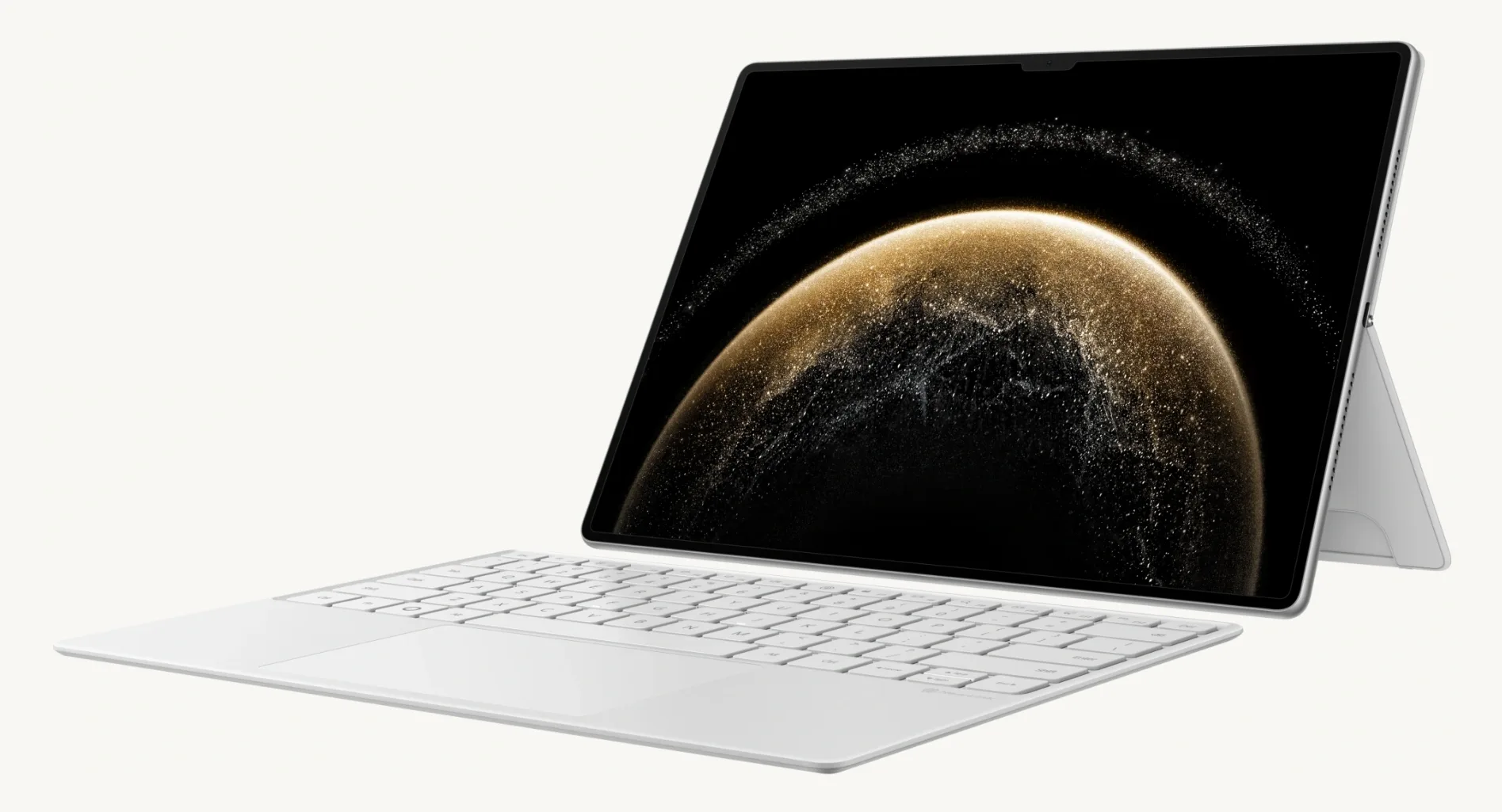
Huawei’s largest tablet, the MatePad Pro 13.2, is usually not available in North America. Image credit: Huawei
Huawei MatePad Pro 13.2: Pros
- Great 13.2-inch screen with nanotextured glass
- 820 cd/m² (nits) maximum brightness
- Very thin (0.22 in / 5.5 mm) and light (1.28 lb / 580 g)
- Pencil and Keyboard are included
- Super-fast charging (100 watts!)
Cons
- No Google Mobile Services
- Poor performance, especially for its price category
- Usually not available in the U.S. and in Canada
- Unclear security updates and Android upgrades policy
- Very expensive
2.3 Apple iPad Pro 13″ (M5)
Update October 2026: since October 22, 2025, the iPad Pro uses the M5 chip. Nano-texture glass is still an option for the 1 TB and 2 TB models only. On October 2, 2026, Apple’s US store asked $1,499 for the base 13-inch model and $2,199 for the cheapest one with nano-texture glass: the matte screen really costs $700 (Apple).
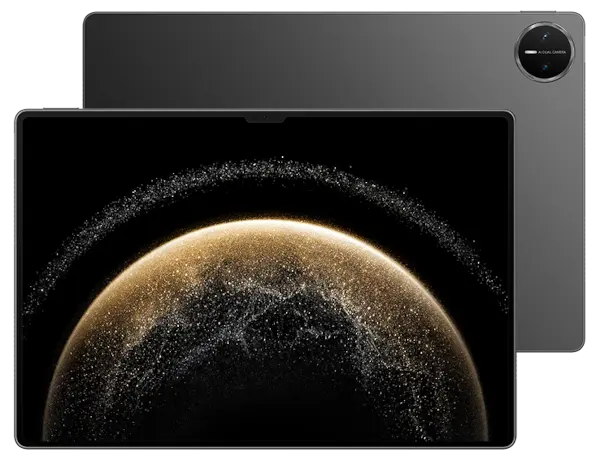
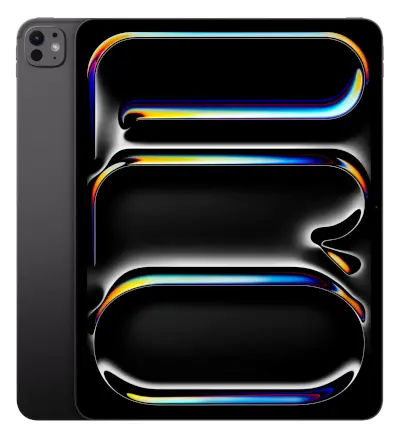
Both the 13-inch and the 11-inch iPad Pro M4 are available with optional nano-textured display glass, which will unfortunately cost you an arm and a leg. Image credit: large-screens.com
Apple iPad Pro 13-inch: Pros
- Fantastic 13-inch screen with nanotextured glass
- Very bright screen (1000 nits full screen)
- Very thin (0.20 in / 5.1 mm)
- Excellent accessories and best stylus (Apple Pencil Pro)
- Best-in-class software support and update policy
Cons
- Nano-texture glass option only available on 1 TB and 2 TB models
- Charges relatively slowly (35 watts)
- Horrendously expensive
Sponsored
2.4 Other 13- and 14-inch matte tablets
The other large tablets with a matte screen are harder to buy:
- Huawei MatePad Edge (14.2 inches, OLED, China only): optional “Soft Light” matte screen. It runs HarmonyOS 5 (HarmonyOS NEXT), which runs no Android apps at all.
- Xiaomi Pad 7 Ultra (14 inches, OLED, 2025) and Xiaomi Pad 9 Pro Max (13.3 inches, LCD, September 2026): both are available with Xiaomi’s “nano soft-light” matte glass, for CNY 600 and CNY 300 more. China only (IT之家, IT之家).
- Lenovo Idea Tab Pro Gen 2 (13 inches, LCD, March 2026): a matte anti-glare edition exists. Sold in Europe and China, not in North America.
- vivo Pad5 Pro Soft Light Edition (13 inches, December 2025) and Honor Pad X10 Pro Max (13 inches, “soft light” version, 2026): China only.
All of them are listed in our list of the largest tablets.
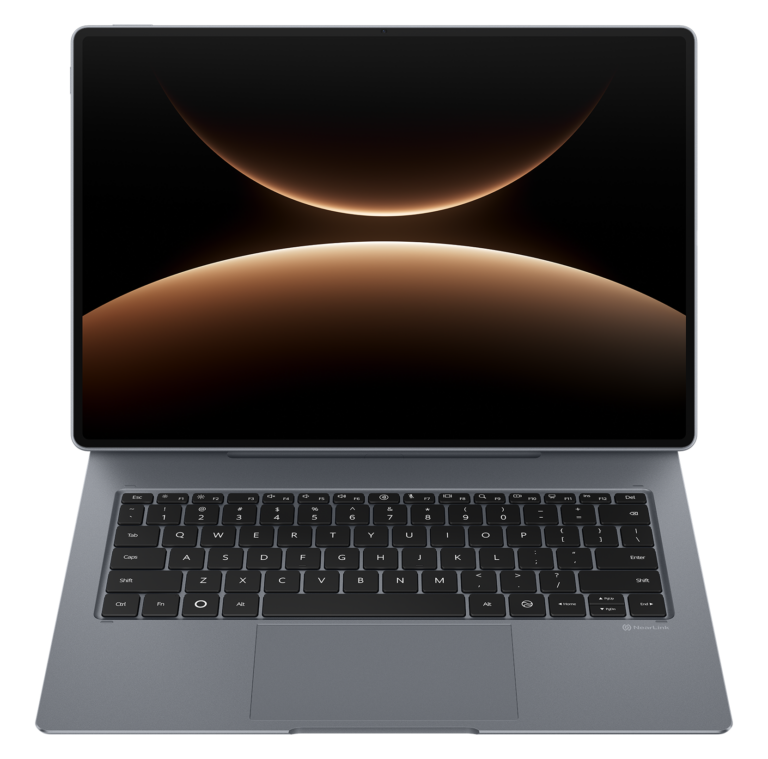
Image: Huawei
Huawei MatePad Edge
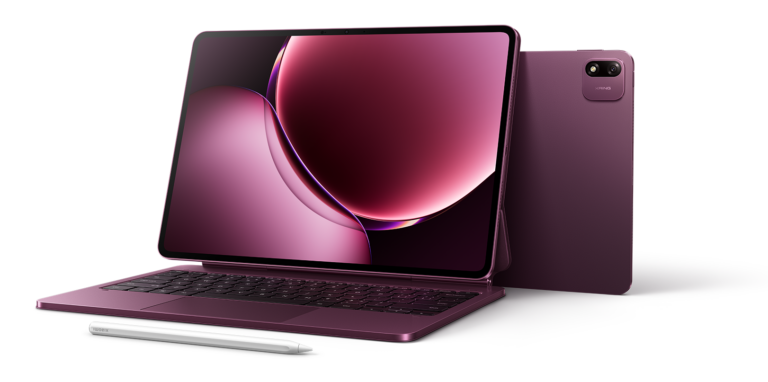
Image: Xiaomi
Xiaomi Pad 9 Pro Max
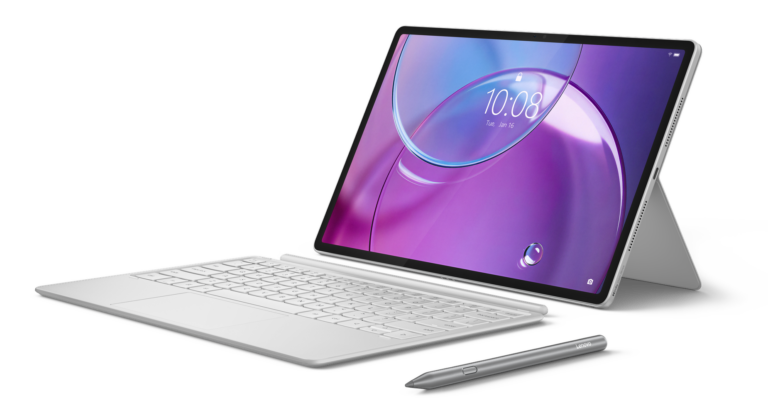
Image: Lenovo
Lenovo Idea Tab Pro Gen 2
3. 12-inch tablets with a matte screen
- Huawei MatePad Pro 12″ (2026): 12-inch OLED, 1600 nits, PaperMatte as standard in Europe. No Google services.
- Huawei MatePad Air (2026): the first Air with optional PaperMatte (a little more expensive in Europe).
- TCL TAB A1 Plus NXTPAPER: 12.2 inches, 120 Hz, sold in the US since August 2026. The best choice for a 12-inch matte tablet with Google services in North America.
- Honor Pad 20 and Pad 20 Pro Paperlike Edition: 12.1 inches, 700 nits; Honor promises 50 % less sparkle. Sold internationally, but not in the UK or North America.
- OPPO Pad 5 Matte Display Edition: 12.1 inches, 900 nits.
- Huion Kamvas Slate 13: 12.7 inches, nano-etched glass, made for drawing; dim (350 nits).
- Xiaomi Pad 7S Pro: 12.5 inches, “nano soft-light” option, China only.
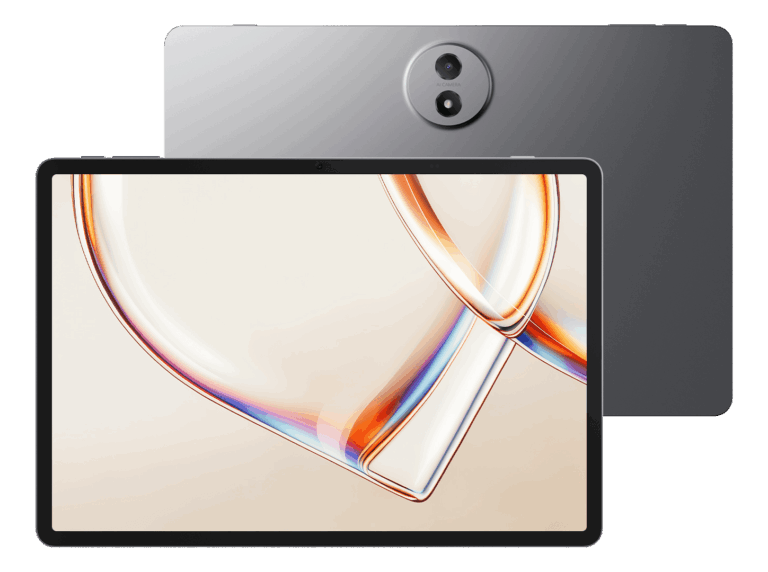
Image: TCL
TCL TAB A1 Plus NXTPAPER
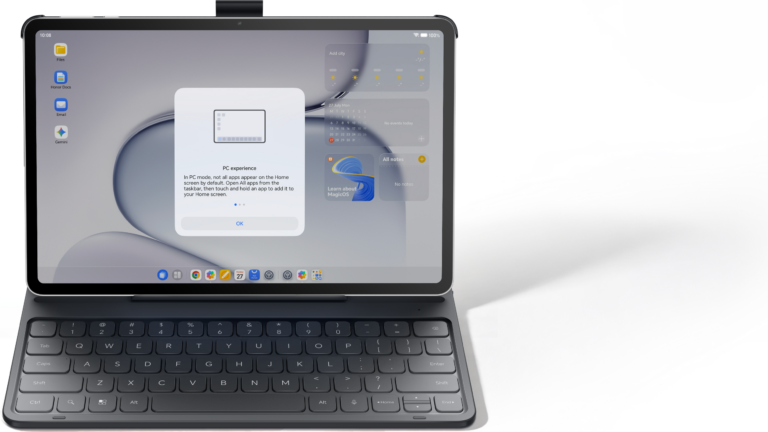
Image: Honor
Honor Pad 20 Pro Paperlike Edition
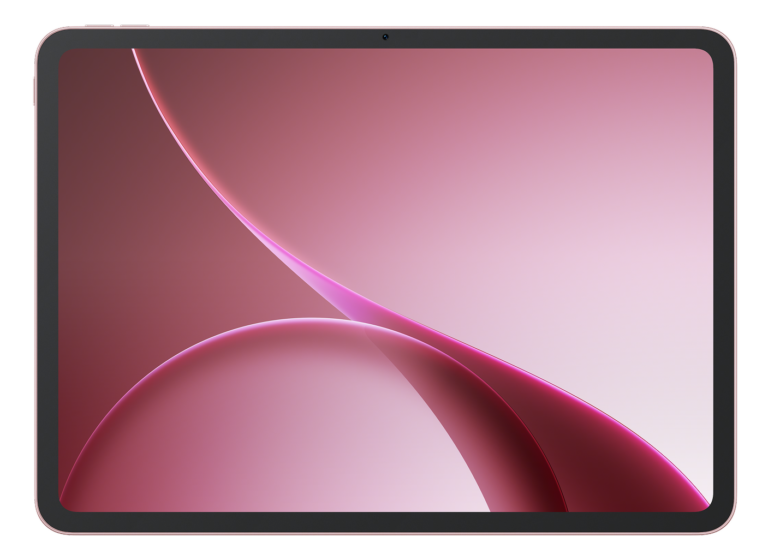
Image: OPPO
OPPO Pad 5 Matte Display Edition
4. 11-inch and smaller tablets with a matte screen
- Apple iPad Pro 11″ (M5): the same nano-texture glass as the 13-inch model, only with 1 TB or 2 TB.
- TCL NXTPAPER 11 Plus, NXTPAPER 11 Gen 2, Note A1 and TAB A1 NXTPAPER: affordable matte tablets with reading modes (Ink Paper, Color Paper). Their screens are dim (300 to 550 nits).
- Huawei MatePad 11.5 S (2026): PaperMatte as standard.
- Xiaomi Pad 8 Pro Matte Glass: sold in Europe and the UK.
- OPPO Pad 3 Matte Display Edition (11.6 inches).
- Wacom MovinkPad 11 and XPPen Magic Note Pad: Android tablets by pen-display makers, with anti-glare glass for drawing and writing.
- Even smaller: the Huawei MatePad Mini (8.8 inches) and the OPPO Pad Mini (8.8 inches) also exist with a matte screen.
5. Matte, nano-texture, anti-reflective: what’s the difference?
Every glossy screen is a weak mirror. A smooth glass surface reflects about 4 % of the light that hits it. That is little, but the reflection is a sharp image of lamps, windows or your face, which sits on top of the picture.
Anti-reflective coatings are very thin transparent layers that make reflections cancel each other out. With standard glass, Apple’s Pro Display XDR monitor reflects 1.65 % of the light, and Samsung cut the reflectance of the Galaxy Tab S10 Ultra from 5 % to 2 %. But the screen stays glossy: the remaining reflection is still a sharp mirror image (Apple, SamMobile).
Matte (anti-glare) screens do not reflect less light: in the words of a Corning patent, anti-glare glass “only changes the characteristics of the reflected light” (patent US9279912). A microscopic relief scatters the reflection in all directions, so the lamp becomes a soft, light veil instead of a sharp spot. The best screens combine both: a matte surface with an anti-reflective coating.
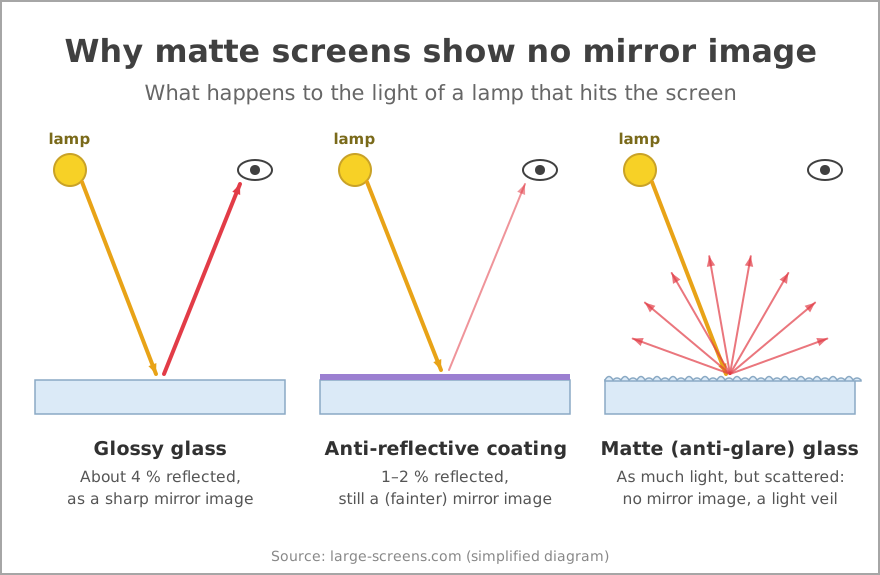
Glossy, anti-reflective and matte screens: what happens to the light of a lamp. Diagram: large-screens.com
The matte technologies, brand by brand
| Name (brand) | What it is |
|---|---|
| Nano-texture glass (Apple) | A texture etched into the cover glass itself (“not a coating but an etched layer”). Option on iPad Pro, MacBook Pro, iMac and Studio Display. |
| PaperMatte (Huawei) | “Nano-level” etched glass; since PaperMatte 3.0 (2025) with an additional light-diffusing film. |
| NXTPAPER (TCL) | Matte etched surface (“nano-matrix lithography” for NXTPAPER 4.0), plus reading modes and circularly polarised light. |
| Paperlike Display (Honor) | “Dual-layer” anti-glare solution with an optical film. |
| Nano soft-light / Matte Glass (Xiaomi) | Anti-glare surface plus an anti-reflective coating; sources disagree on whether it is etched or coated. |
| Matte Display Edition (OPPO) | “Nano-level” anti-reflective etching. |
| Anti-reflective display (Samsung) | Not matte: glossy glass with an anti-reflective coating. |
| Matte screen protectors (Paperlike & co.) | A plastic film with a textured coating, on top of glossy glass. Removable. |
6. The downsides of matte screens
Matte screens are not free of compromises. Reviewers agree on the following points:
- Grain (“sparkle”) and haze: the relief that scatters reflections also slightly scatters the light of the pixels. White areas can look a bit grainy, and the picture a bit softer. The smaller the pixels, the harder it is to avoid; that’s why good matte glass for sharp tablet screens is expensive.
- Lower contrast in bright rooms: the light veil covers the whole screen, so blacks look grey. Notebookcheck measured contrast ratios of only 516:1 and 629:1 on two Huawei PaperMatte LCD tablets (Notebookcheck, Notebookcheck).
- Brightness matters more: a dim matte screen (300 to 550 nits for most TCL tablets) is still hard to read in the sun. The iPad Pro (1000 nits) and the Huawei OLED tablets do much better.
- Scratches and cleaning: in JerryRigEverything’s test, the nano-texture iPad Pro showed marks at Mohs level 3 and scratches at level 4, against level 6 for glossy glass (iMore). Apple asks owners to clean it only with the supplied polishing cloth (Apple).
- Price: on the iPad Pro, the $100 option requires 1 TB of storage, so it really costs $700.
7. Who should buy a tablet with a matte screen?
- Musicians reading sheet music: stage lights and music-stand lamps create bright reflections on glossy screens. A matte screen turns them into a soft veil, so the notes stay readable. See also our sister site tablets-for-musicians.com.
- Students and note-takers: the pen glides with a little more friction, closer to paper. Note that pen tips wear faster.
- Illustrators: same pen feel; for colour-critical work, many reviewers still prefer a glossy screen.
- Outdoor users and people who work next to a window: the main reason to buy a matte screen.
- Readers: a matte screen looks more like paper, especially with TCL’s reading modes.
- Eye strain: fewer reflections are more comfortable, but no controlled study shows that matte screens reduce eye strain; “eye comfort” labels are specification tests, not clinical evidence.
Who should rather choose a glossy screen? People who mostly watch films in a dim room, and photographers who need deep blacks and maximum sharpness.
8. Is nano-texture glass safe? The “glass dust” question
Can nano-texture or matte screens release fine glass dust when you wipe them? Short answer: there is no evidence of it, and it is physically very unlikely.
- The texture is solid glass, not loose particles. Apple’s nano-texture is etched into the cover glass; Huawei and TCL also describe etched surfaces. “Nano” describes the precision of the relief (bumps less than about 2 µm high according to Apple’s patents), not free nanoparticles.
- The amounts are tiny. Even the whole top micrometre of a 13-inch screen weighs only about 0.13 g (see the table). Only a minute fraction of it could ever wear off, and almost none of that would become breathable dust.
- Screen glass is not the dangerous kind of silica. Crystalline silica (quartz dust from cutting stone) causes silicosis and is classified as carcinogenic (IARC group 1). Glass is amorphous: IARC considers amorphous silica “not classifiable” (group 3), and its recommended workplace limit is 120 times higher (NIOSH: 6 mg/m³ against 0.05 mg/m³).
- What actually wears off are thin coatings: the oleophobic (anti-fingerprint) coating and, on some screens, the anti-reflective coating. That is milligrams at most, over years.
- The real risk is a cracked screen, which can cut your fingers.
Apple’s strict cleaning rules protect the look of the screen, not your lungs. No case of harm has been reported, and none of the health authorities we checked (IARC, OSHA, NIOSH, CDC) mentions screens as a source of exposure (IARC, NIOSH).
| Order of magnitude | Mass |
|---|---|
| Whole oleophobic coating of a 13-inch screen (10–20 nm) | 1–2 mg |
| Whole top layer of a 13-inch screen, 1 µm thick (more than the texture) | about 130 mg |
| Amorphous silica a worker may breathe in during one 8-hour shift at the NIOSH limit (6 mg/m³ × about 10 m³ of air) | about 60 mg |
Even in the impossible case where the whole top micrometre of the screen were ground off and breathed in, this would correspond to about two work shifts at the recommended workplace limit for amorphous silica. Calculation: 0.052 m² × 1 µm × 2.4 g/cm³. Sources: Apple (screen size), Corning (glass density), NIOSH.
9. Nano-texture or matte screen protector?
A matte screen protector, such as Paperlike, turns any glossy tablet into a matte one for little money, and you can remove it. But the texture sits on a plastic film, on top of the glass: the picture looks more “frosted”, and reviewers find that it reduces glare less well than nano-texture glass. Built-in matte glass gives a better picture, but it is permanent and expensive. Do not put a protector on a nano-texture iPad: it cancels the effect.
10. More and more tablets with matte screens
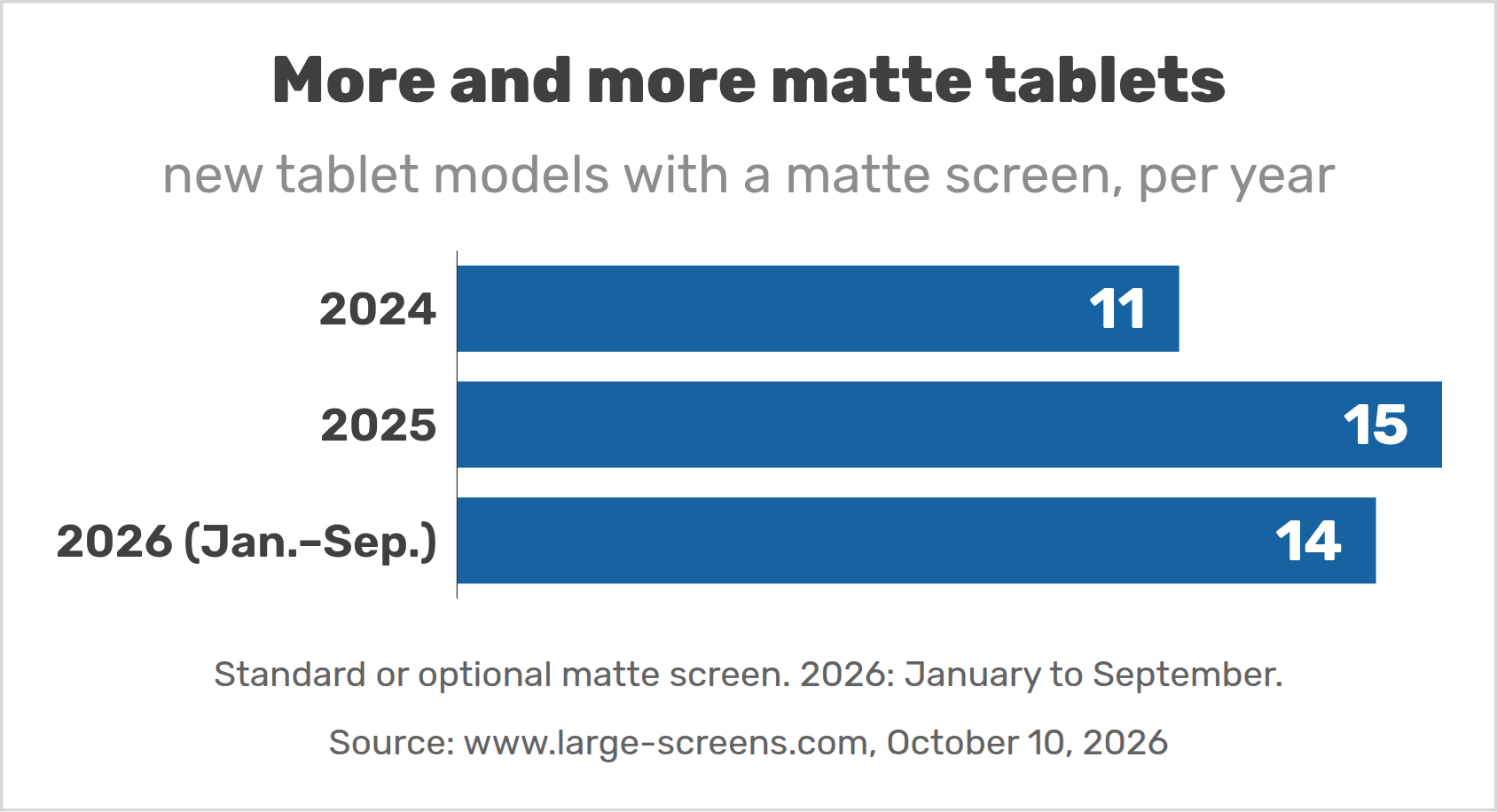
There are more and more tablets with matte screens. We counted 11 new models in 2024, 15 in 2025 and already 14 in the first nine months of 2026. Matte has moved from expensive options to mainstream tablets: Huawei offers PaperMatte on almost all of its tablets, Xiaomi sells a “soft light” version of each new tablet in China, TCL now makes matte twins of its cheapest tablets, and Honor and OPPO sell matte editions outside China.
Two things have not changed: Apple still reserves nano-texture glass for the most expensive iPad Pro models, and most matte Android tablets are not sold in North America. And no matte tablet is larger than 14.3 inches.
11. FAQ: tablets with matte screens
The TCL NXTPAPER 14, with a 14.3-inch screen. In China, the Huawei MatePad Edge (14.2 inches) and the Xiaomi Pad 7 Ultra (14 inches) are also available with a matte screen.
Only the iPad Pro 11″ and 13″, and only with 1 TB or 2 TB of storage. The iPad Air, iPad mini and the basic iPad are only available with glossy screens.
If you often work outdoors, next to a window or under bright lamps, yes: reviewers agree that it almost removes reflections. If you mostly use your iPad indoors, probably not: you pay $700 more (because of the 1 TB requirement) for a slightly less contrasted picture.
No. Samsung’s Galaxy Tab S10+, S10 Ultra and probably the S11 series have an anti-reflective coating: they reflect less light, but the screen is still glossy.
No. NXTPAPER is an LCD with a matte surface and reading modes (Ink Paper, Color Paper) that imitate e-paper. It is a normal Android tablet with a fast, colour screen.
You can, but you should not: a protector cancels the matte effect. Paperlike sells special pen tips for bare nano-texture glass instead.
Apple recommends using only the polishing cloth that comes with the iPad, slightly moistened with 70 % isopropyl alcohol if needed. Avoid paper towels, abrasives and sprays, and brush off sand or grit before wiping.
There is no evidence of it, and it is very unlikely: the texture is part of a solid glass sheet, and screen glass is not crystalline silica. Read our detailed answer.
Yes, a rougher surface wears pen tips faster. Replace them when they become flat or scratchy.
Fewer than in Europe or China: in North America, you can buy the iPad Pro with nano-texture glass, TCL’s NXTPAPER tablets, and the drawing tablets by Wacom, XPPen and Huion. Huawei, Xiaomi, Honor and OPPO do not sell their matte tablets there.